Practical Shade Strategies for Myrtle Beach Homeowners
Myrtle Beach homeowners can manage summer heat by placing shade solutions based on daily yard use, sun angles, and coastal weather demands.
Why this matters locally
Hot summer temperatures and strong coastal sun can make unshaded Grand Strand patios and decks unusable during key hours of the day.
Homeowners in Myrtle Beach and across the Grand Strand dealing with hot, dry summer weather can improve outdoor comfort by designing shade around actual daily yard use rather than trying to cover an entire property. Tracking where sun and glare strike throughout the day helps pinpoint the best locations for overhead and side protection.
A layered shade strategy works best for coastal outdoor spaces. Priority should be given to highest-use zones, such as outdoor dining tables, grill prep areas, pool decks where children are supervised, and south- or west-facing entrance doors. Because overhead canopies do not block low-angle late afternoon sun, homeowners facing west-facing glare can utilize vertical options like exterior roller shades, side curtains, or strategic screening.
Several practical options exist depending on the yard's layout and structural support:
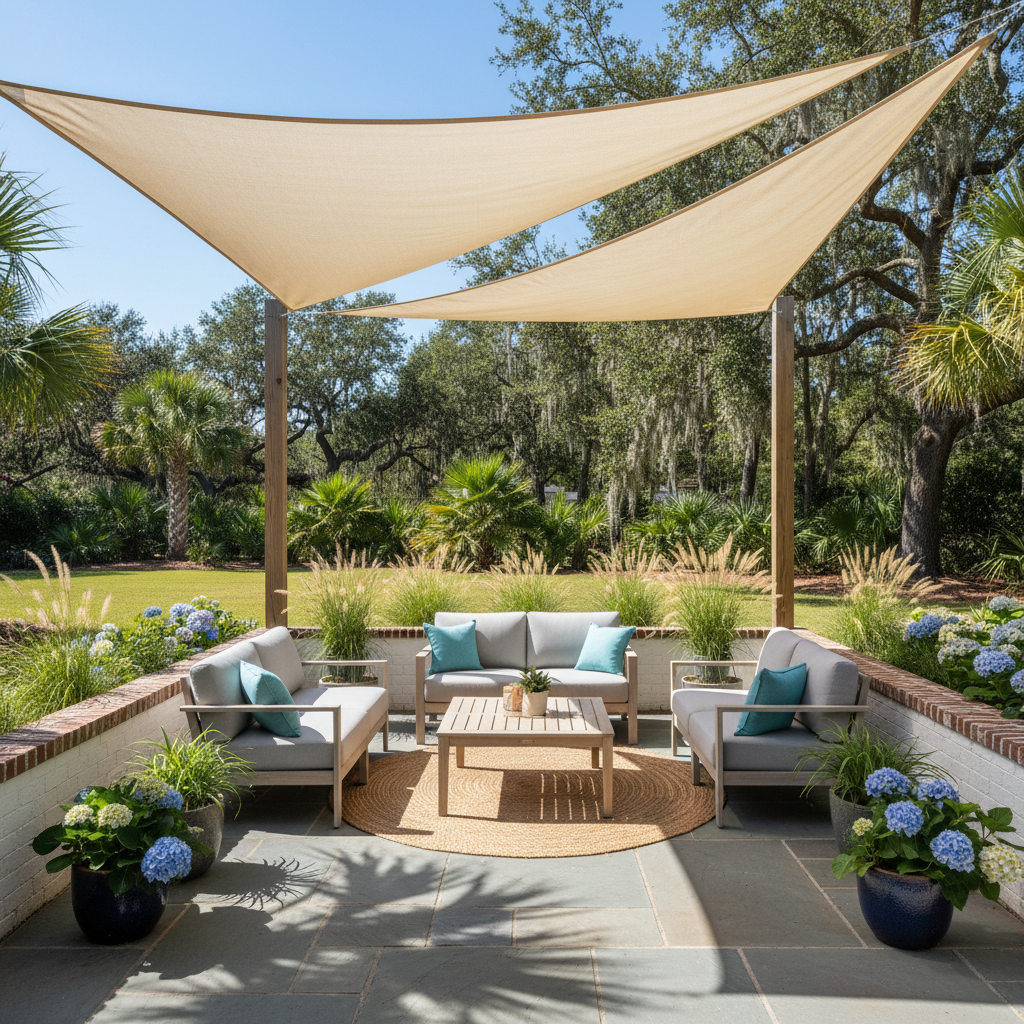
- Sun Shade Sails: Ideal for fixed patios or poolside seating, sails offer overhead coverage without fully enclosing a space. Triangles work well for small corners, while rectangular sails fit dining areas. Sails require secure attachment points, tensioning space, and a slope for rain runoff. They should be uninstalled ahead of severe coastal storms unless specifically rated for severe weather exposure.
- Umbrellas: A simple, movable choice for shifting sun patterns. Market umbrellas fit dining tables, while offset umbrellas clear space for lounge chairs. Heavy, stable bases are required to handle coastal winds, and canopies should be closed when unattended.
- Side Shade Options: Exterior roller shades (including track- or cable-guided models) and outdoor fabric curtains help manage low-angle sun on screened porches and covered patios. These should be placed deliberately to avoid blocking natural breezes or creating heavy maintenance.
- Long-Term Solutions: Built-in structures like pergolas define dining spaces but usually need added slats, fabric, or louvers for full shade. Landscape plantings can lower temperatures over time, provided homeowners account for salt tolerance, root depth, leaf drop, and maintenance.
To maximize cooling, property owners should also consider airflow and surface heat. Lighter-colored pavers, breathable furniture, and outdoor fans help reduce heat build-up. Dark concrete, black metal chairs, and reflected glare from light walls or glass doors can retain heat even in shaded areas. Selecting low-maintenance, easily cleanable materials helps withstand local pollen, salt air, and storm debris.
Quick facts
- Target Area: Myrtle Beach & Grand Strand residential yards
Community brief · prepared from MyrtleBeachSC News material · original source